Keep me updated!
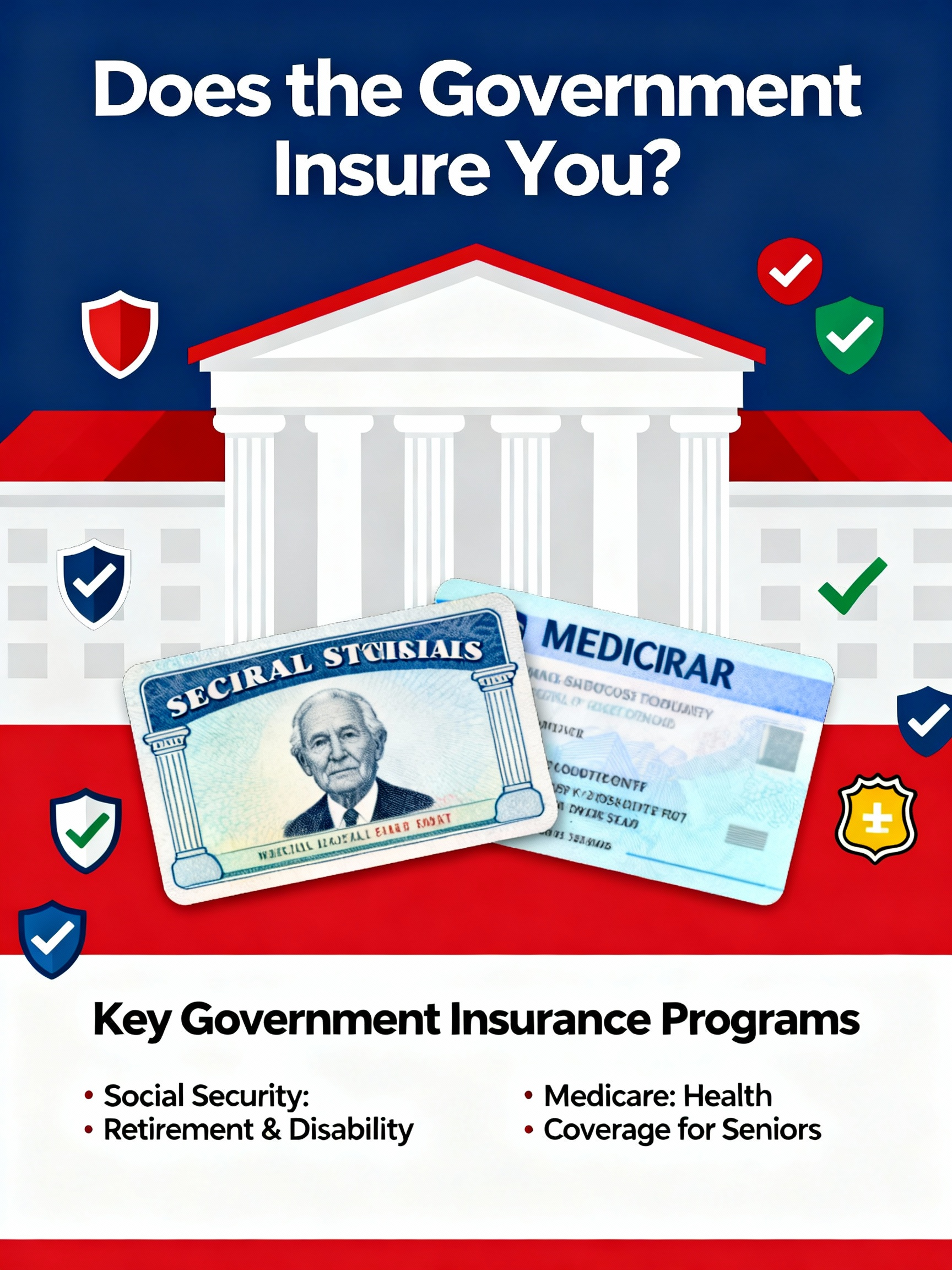
Many Americans pride themselves on independence, entrepreneurship and limited government interference. Yet it might surprise you to learn that, in several important ways, you may already be relying on Uncle Sam for your insurance needs — whether you realize it or not.
How Federal Insurance Already Protects Millions
Even if your policies come from major private insurers like State Farm or Travelers, the federal government is more involved in your coverage landscape than you might think.
Federal Flood Insurance Through FEMA
If you’re among the 5 million Americans with flood insurance, there’s a strong chance your policy is backed by the National Flood Insurance Program (NFIP), administered by FEMA. Your premium goes to the federal government, and claims are paid out by the federal government. It’s full-on federal insurance, plain and simple.
Federal Mandates That Require Insurers to Cover You
In other cases, the government isn’t directly insuring you — but it’s requiring private insurers to take on risks they might otherwise avoid. The best example is the Affordable Care Act (ACA). Under the ACA, insurers must issue health policies regardless of preexisting conditions. And with roughly 45 million Americans enrolled, the ACA represents a massive federal footprint in the insurance market.
Keep me updated!
State Governments Provide Insurance, Too
Federal involvement isn’t the only story. States also step in when private insurers can’t or won’t take on certain risks.
California, Florida, Louisiana, New York and Texas run state-backed insurance programs that collectively cover about 1.7 million policies. These plans often serve as insurers of last resort when wildfire, hurricane or other catastrophic risks make private coverage scarce or too expensive.
Medicare: The Biggest Government Insurance Program of All
The most significant example of government-backed insurance has been around for nearly 60 years: Medicare. Since 1965, Medicare has grown to insure more than 64 million Americans. That’s roughly 19% of the entire U.S. population — nearly one in five people.
Whether through Medicare Advantage, traditional Medicare or supplemental policies, the government is directly involved in managing and funding a huge portion of the nation’s healthcare coverage.
Why Governments Step In
If private insurers could handle every risk, there’d be no need for federal and state involvement. But some risks are so large, so probable or so potentially catastrophic that private insurers simply can’t absorb them.
Insurance works by charging premiums that are significantly lower than the potential losses. But what happens when:
- The likelihood of a loss is extremely high
- The potential payout is extraordinarily large
- Catastrophic events affect many policyholders at once
In those cases, the premium required might approach the value of the risk itself. If insuring a $1 million exposure requires a $200,000 annual premium, most people would choose to self-insure instead — and private companies would struggle to remain solvent.
That’s where federal and state governments step in. They create programs or require insurers to participate so the market doesn’t collapse and consumers can still obtain coverage.
The Future of Government-Backed Insurance
As natural disasters grow more frequent and more severe, and as insurance markets struggle to keep up, we may see even more reliance on federal and state financial backing in the years to come. Private insurers alone can’t absorb every type of emerging risk — but the U.S. government has the resources and mandate to step in when needed.
Like it or not, Uncle Sam already plays a major role in the insurance world. And unless the risk landscape changes dramatically, that role is only likely to grow.
Keep me updated!