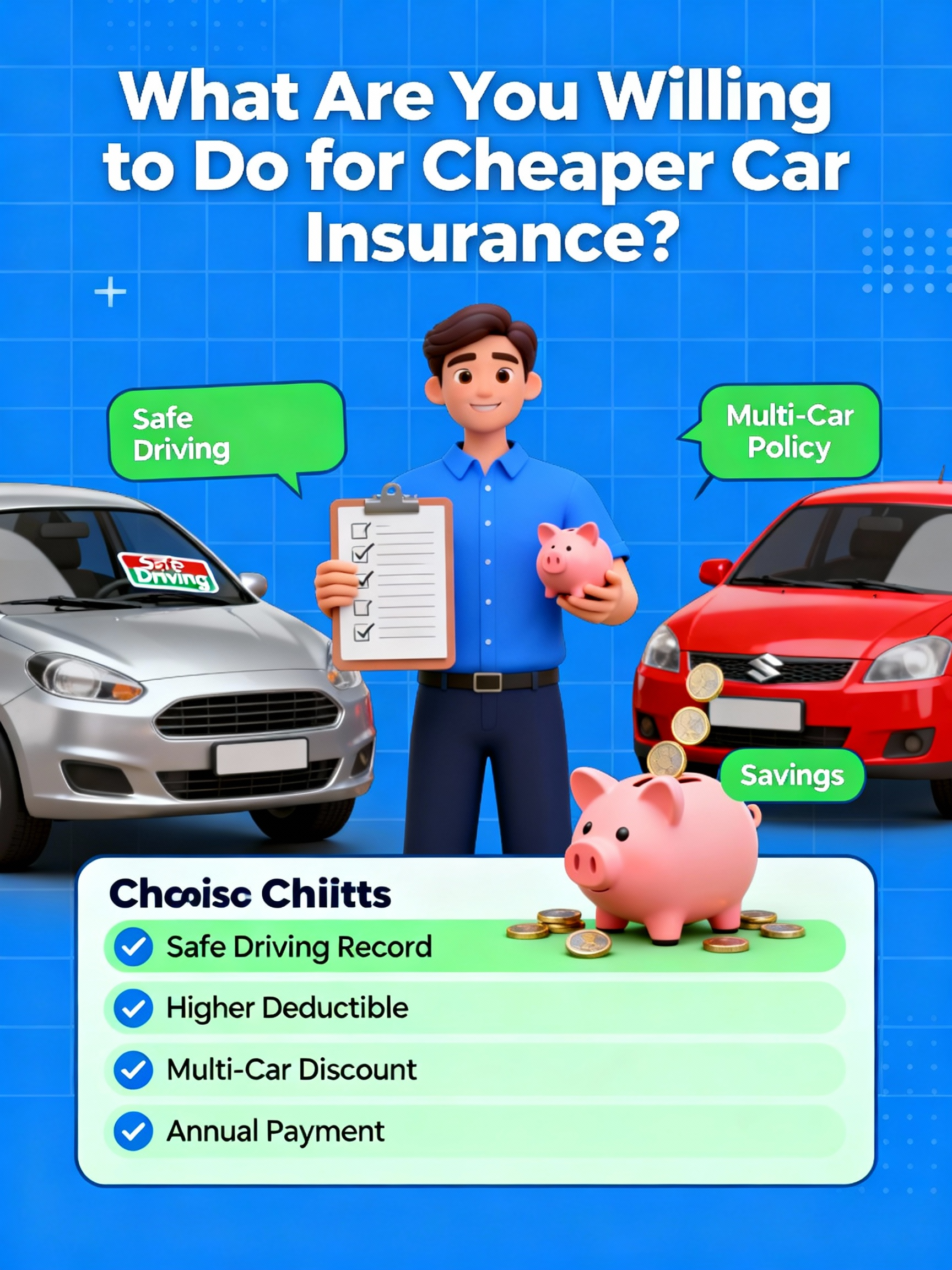
Sharing your credit score or your driving habits with your insurer might feel intrusive, but doing so could help lower your auto insurance premium — assuming the data paints you as a safe, responsible driver.
The first auto insurance policy was sold in 1897 for about $11 and provided $1,000 in liability coverage. Adjusting for what we get today, the cost per $1,000 of coverage has actually gone down. But the amount we pay out of pocket has gone up because the price of everything connected to auto insurance — labor, parts, cars and the size and frequency of claims — has soared.
So if the cost of coverage keeps increasing, what can you do to meaningfully lower your premium? Insurers turn to data. Lots of it. And some of that data may come from you.
How Your Credit Score Affects Your Rate
It may seem strange that your credit score has anything to do with your likelihood of causing a crash, but the data says otherwise. Studies by the Federal Trade Commission and the Insurance Information Institute have consistently shown a strong correlation between credit-based insurance scores and claim frequency.
It isn’t personal. It’s statistics. People with stronger credit histories tend to file fewer insurance claims. Some states allow insurers to use this information to set premiums; others do not. If your state allows it, are you willing to share your credit report with your insurer to potentially save money?
How Your Driving Behavior Impacts Your Premium
We all know drivers who are more cautious than others. Likewise, we know the ones who accelerate hard, tailgate and tap the brakes a little too often. These habits show up in accident data, and many insurers now offer discounted rates to drivers who can prove they’re safer than average.
This proof comes through
driver telematics. Depending on the insurer, that could mean:
- An app on your smartphone tracking your driving; or
- Your vehicle’s manufacturer sharing driving data directly.
Telematics can monitor things like:
- Speed
- Hard braking
- Sudden acceleration
- Cornering behavior
- Driving times and frequencies
If you’re a careful driver, the data will reflect that — and your insurer may reward you with a lower premium. But it raises an important question: Are you willing to let your insurer see this level of detail about your driving habits?
The Future of Auto Insurance Pricing
Whether or not you’d personally share this information, the decision may not be entirely yours. Some state insurance regulators have strict rules about what data insurers can use. Others allow broad use of telematics and credit-based scoring.
Like it or not, we’re moving toward a world where big data plays a major role in determining your premium. It may not be long before slamming on the brakes to avoid a squirrel has you thinking, “Whew… and I hope that doesn’t raise my rate.”
For now, the question stands: How much personal data are you willing to exchange for a cheaper auto insurance premium?